How to Measure Law Firm Digital Marketing ROI

Law firm digital marketing ROI is defined as the revenue attributable to marketing minus marketing costs, divided by those costs, expressed as a percentage. Most firms track clicks and leads. The ones that grow track signed cases and revenue. To measure law firm digital marketing ROI with any accuracy, you need integrated data connecting your ad spend to retained clients, not just contact form submissions. Tools like Clio Grow, CallRail, and Google Analytics make that connection possible. Without them, budget decisions are guesswork dressed up as strategy.
How to measure law firm digital marketing ROI accurately
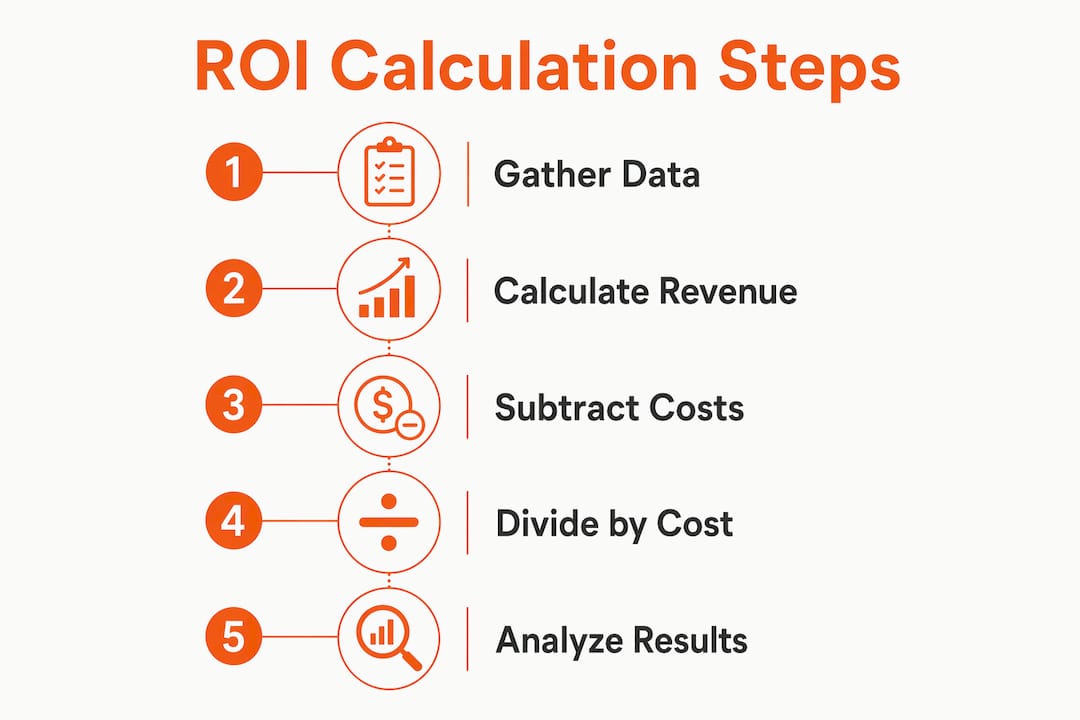
The ROI formula is straightforward: (Revenue from marketing minus marketing cost) divided by marketing cost, multiplied by 100. A campaign that costs $10,000 and generates $60,000 in signed case revenue produces a 500% ROI, or a 5:1 ratio. That ratio only means something if the revenue figure is real, which requires reliable attribution from first click to signed retainer.
Most firms are not there yet. Only 16% of firms can attribute more than 75% of their signed matters to a specific marketing channel. That gap is not a data problem. It is a systems problem, and it is fixable.
What data you actually need
Before you calculate anything, you need four data points for each channel: total marketing spend, number of signed cases, average case revenue, and the source of each signed client. Marketing spend is easy. The other three require your CRM, your intake team, and your accounting system to talk to each other.

| Data point | Source |
|---|---|
| Marketing spend by channel | Google Ads, Meta Ads, agency invoices |
| Signed cases by source | Clio Grow, CRM intake reports |
| Average case revenue | Accounting software, billing records |
| Lead source attribution | CallRail, UTM parameters, CRM fields |
Pro Tip: Set up a mandatory "lead source" field in your CRM intake form from day one. If intake staff skip it, your attribution data is worthless before it starts.
Building your technology stack
Google Data Studio (now Looker Studio) pulls data from Google Analytics, Google Ads, CallRail, and Clio into a single dashboard. That centralization is what separates firms with real ROI visibility from firms running on gut feel. CallRail handles call attribution by assigning unique phone numbers to each channel. Clio Grow tracks the lead-to-client journey, producing a Lead Source Revenue Report that ties retained clients back to their originating channel. Preserving UTM parameters end-to-end through your CRM is non-negotiable. Without them, device switching and long intake cycles erase your first-touch data.
How to calculate ROI by channel and signed case
Generic ROI calculations hide more than they reveal. A channel that produces 40 leads at $50 each looks great until you discover only two of those leads signed. Calculate cost per signed case instead of cost per lead, and the picture changes completely.
Here is the process:
- Pull 12 months of marketing spend by channel (Google Ads, Local Service Ads, SEO, social).
- Pull your CRM's signed case report for the same period, filtered by lead source.
- Divide total channel spend by signed cases from that channel to get cost per signed case.
- Multiply signed cases by average case revenue to get revenue attributable to that channel.
- Apply the ROI formula: (Revenue minus spend) divided by spend, times 100.
Comparing channels with real 2026 data
2026 PPC data from law firm campaigns shows a clear pattern: Google Ads received 60% of the budget and produced 49.7% of signed cases at $2,971 per case. Local Service Ads received 40% of the budget and produced 50.3% of signed cases at $2,485 per case. LSAs delivered more signed cases at a lower cost per case despite receiving less budget. That is a direct argument for reallocation, and it only becomes visible when you measure at the case level.
| Channel | Budget share | Signed cases | Cost per signed case |
|---|---|---|---|
| Google Ads | 60% | 49.7% | $2,971 |
| Local Service Ads | 40% | 50.3% | $2,485 |
A 5:1 revenue-to-cost ratio is a reasonable benchmark for paid channels. A 10:1 ratio is strong. Anything below 3:1 warrants scrutiny before you renew a contract.
Pro Tip: Segment your ROI calculation by practice area, not just channel. A personal injury campaign and an estate planning campaign have different case values, different sales cycles, and should never share the same ROI benchmark.
Common challenges in law firm marketing attribution
Attribution is where most firms stall. Cost per lead misleads budget decisions because it optimizes for volume, not value. A channel generating 100 cheap leads that convert at 1% is worse than a channel generating 20 expensive leads that convert at 20%. The math is obvious in hindsight. It is invisible when you are only tracking CPL.
The most common attribution failures in legal marketing:
- No call tracking: Phone calls are the primary intake channel for most practice areas. Without CallRail or a similar tool, every inbound call is an attribution dead end.
- CRM fields left blank: Intake staff skip the lead source field under pressure. One month of missing data corrupts your annual report.
- Offline conversions ignored: Referrals, events, and bar association contacts rarely get logged. They distort your digital channel performance upward when those clients sign.
"When exact attribution is impossible, measure relationship momentum and partner activity as proxies for ROI. These softer signals are defensible and directionally accurate." JD Supra
ROI dashboards only add value if they connect to real budget decisions. A dashboard that gets reviewed quarterly and changes nothing is theater. Build your reports around the question: "What would we do differently if this number changed?"
How to use ROI data to optimize your marketing budget
Once you have cost per signed case by channel, budget reallocation becomes a financial decision, not a preference. The LSA versus Google Ads example above is a direct template. You shift dollars toward the lower cost per signed case channel until performance equalizes or degrades.
Here is how to apply that logic operationally:
- Rank all active channels by cost per signed case, lowest to highest.
- Identify any channel where cost per signed case exceeds your average case revenue divided by three. That channel is destroying margin.
- Reallocate 20% of that channel's budget to your lowest cost per signed case channel for 90 days.
- Measure the change in total signed cases and total cost per signed case across the portfolio.
Intake speed multiplies every dollar you spend on paid advertising. Automating intake with Clio Grow improves speed-to-lead, follow-up consistency, and scheduling efficiency. A firm that answers a lead within five minutes converts at dramatically higher rates than one that responds the next morning. That conversion lift raises the effective ROI of every channel without changing your ad spend.
SEO and content marketing carry a different ROI profile. They cost more upfront and take six to twelve months to produce signed cases. Their cost per signed case drops significantly over time because the content keeps generating leads without additional spend. Include them in your ROI model using a 24-month attribution window, not a 90-day one.
Pro Tip: Track your call answer rate weekly. If your intake team answers fewer than 80% of inbound calls during business hours, your marketing ROI is being destroyed at the phone, not in the ad platform.
What ongoing reporting practices sustain accurate ROI tracking
ROI measurement is not a one-time project. Launching accurate attribution requires retrospective analysis of at least 12 months of data and ongoing collaboration between marketing and finance. Most firms treat it as a setup task. The ones with reliable data treat it as a monthly operational discipline.
Sustaining accuracy requires four practices:
- Monthly CRM audits: Review signed case records for missing lead source fields. Correct them before they compound.
- Quarterly UTM reviews: Confirm that all active campaigns carry correct UTM parameters and that those parameters are flowing into your CRM.
- Channel spend reconciliation: Match your ad platform spend reports against your accounting records every month. Discrepancies are common and consequential.
- Dashboard review cadence: Schedule a monthly 30-minute review of your Looker Studio dashboard with both your marketing lead and a finance representative.
Marketing ROI accuracy depends as much on accounting data as on marketing analytics. That cross-department collaboration is where most firms fail. Finance does not know what UTMs are. Marketing does not know how revenue gets recorded. Closing that gap is a management decision, not a technical one.
Pro Tip: Build your Looker Studio dashboard around three numbers: cost per signed case by channel, total signed cases by month, and revenue attributable to marketing. Everything else is context.
Key takeaways
Accurate law firm marketing ROI requires integrating CRM, call tracking, and financial data to calculate cost per signed case by channel, then using that metric to drive budget decisions.
| Point | Details |
|---|---|
| Use the right formula | Apply (Revenue minus cost) divided by cost to get a true ROI percentage per channel. |
| Track signed cases, not leads | Cost per signed case reveals actual marketing value; cost per lead conceals conversion failures. |
| Fix attribution first | Only 16% of firms can attribute most signed cases to a channel. Fix your CRM and call tracking before optimizing spend. |
| Reallocate based on data | LSAs outperformed Google Ads at lower cost per signed case in 2026. Let case-level data drive budget shifts. |
| Sustain with monthly reviews | ROI data decays without monthly CRM audits, UTM checks, and finance collaboration. |
Why case-level economics changed how I think about legal marketing
Most law firm marketing conversations I encounter focus on impressions, clicks, and rankings. Those metrics are not wrong. They are just incomplete. The moment a firm starts tracking cost per signed case by channel, the conversation changes entirely. Suddenly, a campaign that looked expensive becomes the most efficient driver of revenue in the portfolio. And a campaign that looked cheap reveals itself as a lead generator for cases that never sign.
I have worked with firms using Clio Grow and Looker Studio together, and the clarity that combination produces is striking. You can see, in one report, exactly which channels are generating retained clients and at what cost. The firms that act on that data, reallocating budgets monthly rather than annually, consistently outperform firms that rely on agency reports summarizing impressions and clicks.
The intake side is where I see the most unrealized ROI. A firm can have perfect attribution and a strong cost per signed case, then lose 30% of its potential clients because calls go to voicemail after 5 PM. Measurement without operational follow-through is an expensive habit.
Legal marketing analytics in 2026 is moving toward AI-assisted lead scoring and automated intake workflows. Firms that build clean attribution systems now will be positioned to layer those tools on top of reliable data. Firms that skip the foundation will automate their confusion.
— laya
How Omnivancemedia helps law firms turn data into signed cases

Omnivancemedia builds the integrated marketing systems that make accurate ROI measurement possible for law firms. That means connecting your CRM, call tracking, and ad platforms into a single reporting structure, then using that data to allocate budget toward the channels producing the lowest cost per signed case. Omnivancemedia's CRM integration and automation services handle the technical setup that most firms lack internally. Their law firm digital marketing practice combines SEO, paid advertising, and intake optimization into one accountable system. If your current reporting cannot tell you which channel signed your last ten clients, that is the problem Omnivancemedia solves. Explore the full service portfolio to see where the gaps are.
FAQ
What is the formula for law firm marketing ROI?
Law firm marketing ROI equals revenue attributable to marketing minus marketing cost, divided by marketing cost, multiplied by 100. A 5:1 revenue-to-cost ratio is a standard benchmark for paid channels.
Why is cost per signed case better than cost per lead?
Cost per lead measures volume. Cost per signed case measures revenue. A channel with cheap leads that rarely convert produces worse ROI than a channel with expensive leads that sign at high rates.
What tools do law firms use to track marketing ROI?
Clio Grow tracks leads through to retained clients by source. CallRail attributes inbound calls to specific channels. Google Looker Studio centralizes all data into a single ROI dashboard.
How many months of data are needed for reliable attribution?
At least 12 months of data is required for reliable law firm marketing attribution, accounting for seasonal variation in case volume and the length of typical intake cycles.
What should a firm do if attribution is incomplete?
Fix CRM lead source fields and call tracking first. Where attribution remains incomplete, use relationship momentum and business development activity as directional proxies for ROI, as recommended by JD Supra.